Tag Archives: Technicolor

Jesse James 1939

20th Century Fox

Nineteen Thirty Nine was a big year for train movies. Union Pacific. Dodge City. Even Gone With The Wind. Adding to the pile, is today’s feature, Jessie James. In Technicolor, no less.

Of course the star of the show is Dardanelle & Russellville #8, a 4-4-0 built by Cooke Locomotive and Machine Company in February 1888. Originally constructed as Fort Worth and Denver City #9, in 1899 it came to the Dardanelle & Russellville Railroad, a five-mile Arkansas short line between its namesake towns.

In 1933, D&R #8 was retired with mechanical problems and left on a siding at Dardanelle. Hollywood came calling in 1938, sending the 4-4-0 to Missouri Pacific’s North Little Rock, Arkansas shops for a rebuild. The locomotive (and 3 D&R passenger cars) then made its way to Neosho, Missouri where train scenes were filmed along the Kansas City Southern Railway.

(Many thanks to Larry Jensen’s “The Movie Railroads” pages 196-197 for data on the engine.)

D&R #8 is still with us. As of 2024, it is a resident of the Nevada State Railway Museum in Carson City. Image by William Acord taken May 1992 at NSRM from RRPictureArchives.net

Continue reading
Annie Get Your Gun 1950

Metro Goldwyn Mayer

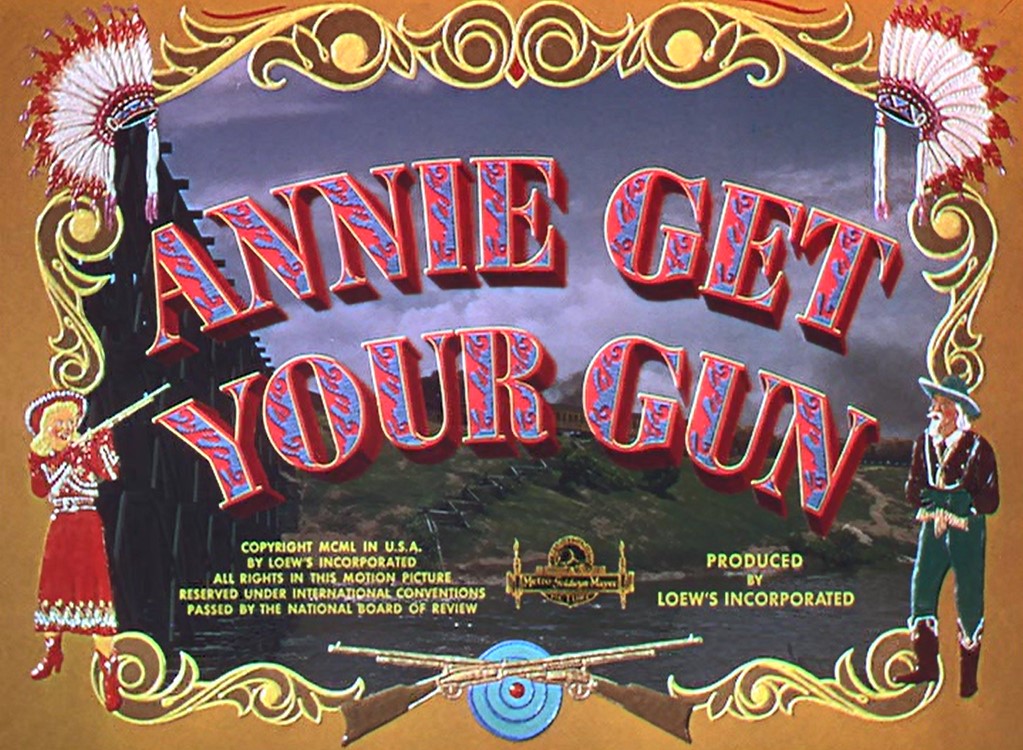
Pull! It’s a Technicolor musical extravaganza, featuring Buffalo Bill’s Wild West Show — which happily for us, traveled by train back in the day. Annie Oakley (played by Betty Hutton) and Frank Butler (played by Howard Keel) star as a pair of sharpshooters which is based on a true story.

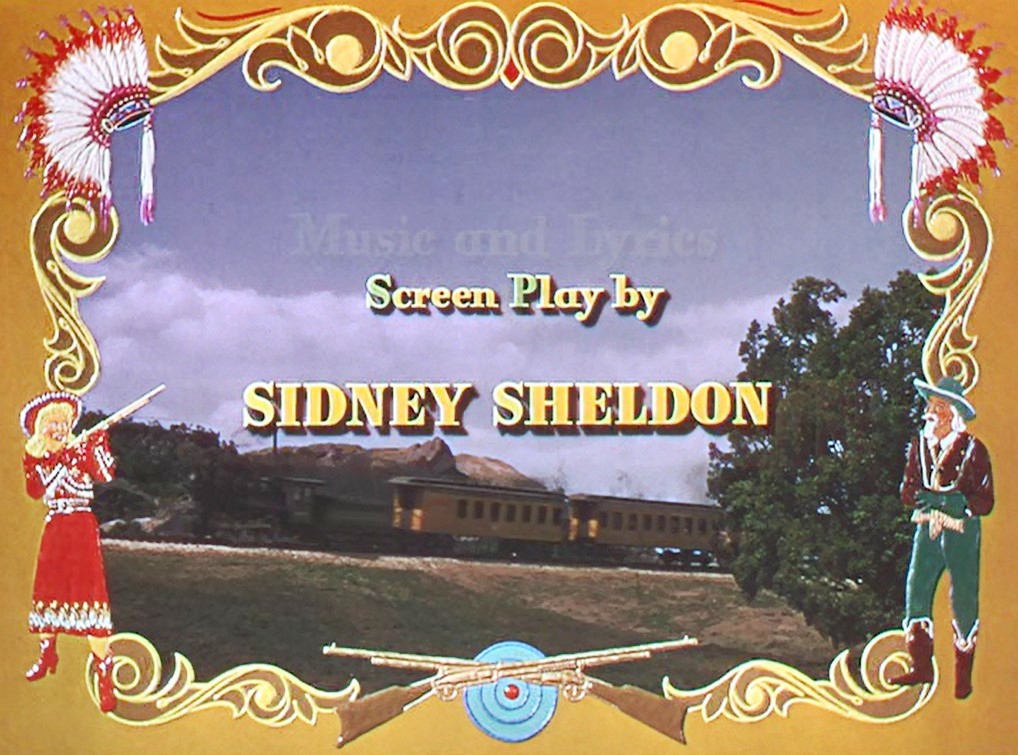
According to Larry Jensen’s “Hollywood’s Railroads, Volume One”, MGM used their ex-Virginia & Truckee 4-4-0 #11 (The Reno) for studio train scenes. Unfortunately, the editors saw fit to only give a glimpse (see above) of Reno’s TENDER with “Transcontinental & Western” script lettering – concentrating instead on a string of bright yellow coaches.

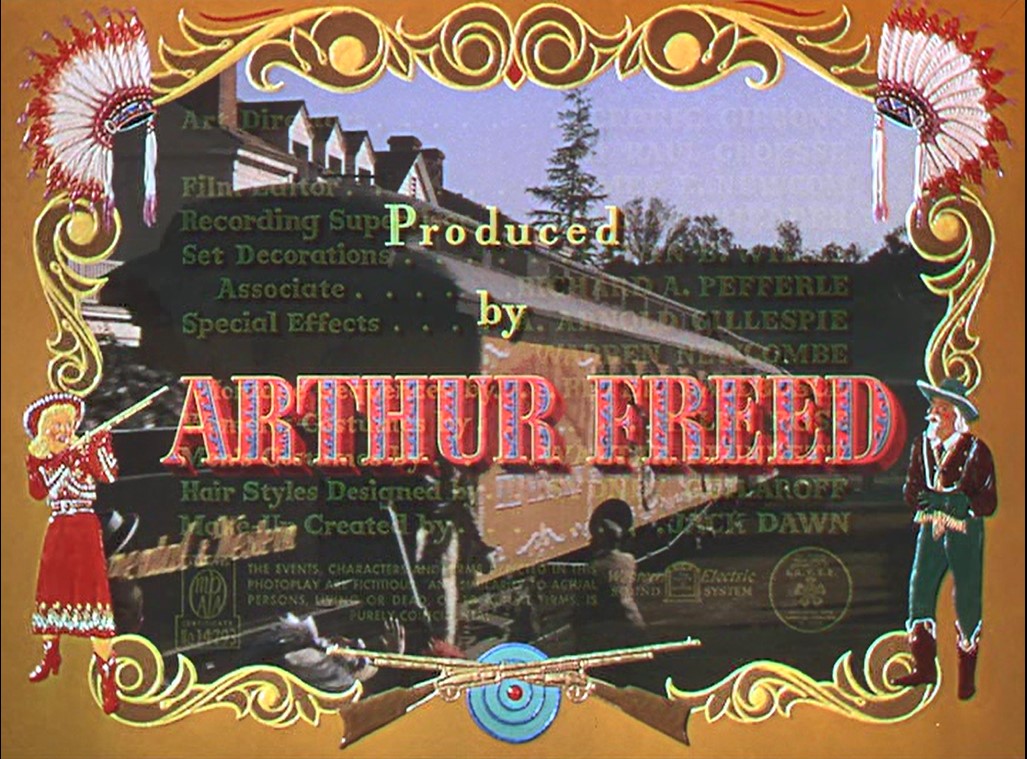
Other train scenes utilized a model train for the credits (see top) and lifted footage of Sierra Railroad #18 directly out of Dodge City 1939 (see bottom).

A well-lit broadside of ATSF #18 (Sierra #18) 2-8-0 Baldwin 1906 pedaling furiously along. Close ups of this engine were used as bridging shots in Annie Get Your Gun.

Continue reading

A Ticket to Tomahawk 1950

20th Century Fox

I actually reviewed Tomahawk back in the early days of Obscure Train Movies — It just wasn’t much of a review. Today, I hope to do a better job revisiting A Ticket To Tomahawk in all its Technicolor glory. This is the movie that put the Durango and Silverton D&RGW narrow gauge line on the map. Not only did people come to ride the little train in Southwestern Colorado, moviemakers returned to film other pictures too numerous to list here.

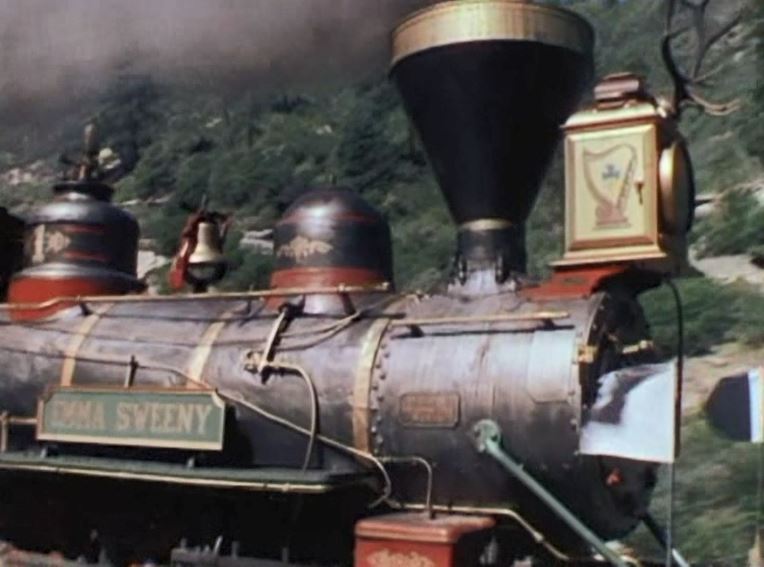
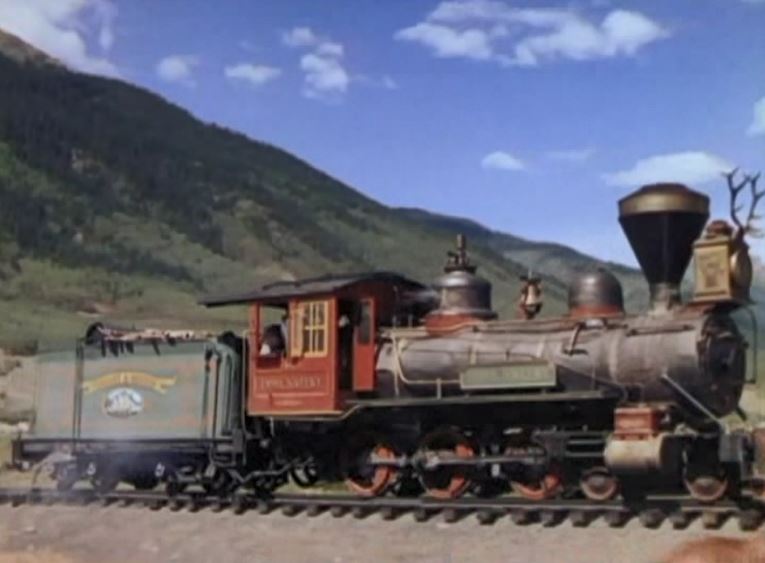
The star of the show is Rio Grande Southern #20, 4-6-0 3-foot narrow gauge steam locomotive. #20 was originally built for the Florence and Cripple Creek Railroad in 1899 by Schenectady Locomotive Works (Alco). For its movie appearance, RGS #20 was decorated in a colorful paint scheme and named “Emma Sweeny” as Tomahawk & Western Railroad #1.

Just look at all that detail! Red and gold paint accentuates the green Emma Sweeny signboard. Antlers on the headlight box and white “extra train” flags flapping in the breeze. In another view, Emma poses in good light near Silverton.

Apologies for the fuzzy screen caps. AFAIK, Fox never released Tomahawk on DVD, so I had to make do with an aftermarket product.

Continue reading

The Greatest Show on Earth 1952

gse001

Paramount Pictures

The circus traveled by rail as demonstrated in Cecil B. DeMille’s Technicolor masterpiece of 1952. Winning the Oscar for Best Picture, this is the film that made Charlton Heston a star.

For this review, I concentrated on circus scenes that had trains in the background. Some highlights include an Atlantic Coast Line (ACL) steam locomotive and caboose, a Pennsy GG-1 electric and a elaborately-detailed scale model of the two circus trains.

Our review begins 19 minutes into the movie as the Ringling Brothers and Barnum & Bailey Circus (RBandB&B) prepares to leave its Winter Quarters in Sarasota, Florida.

gse008

It took hundreds, if not thousands of people to operate the circus. As wagons of equipment are loaded piggyback-style on the left, performers and support staff prepare to board the passenger train on the right.

Continue reading