Tag Archives: EMD FT units

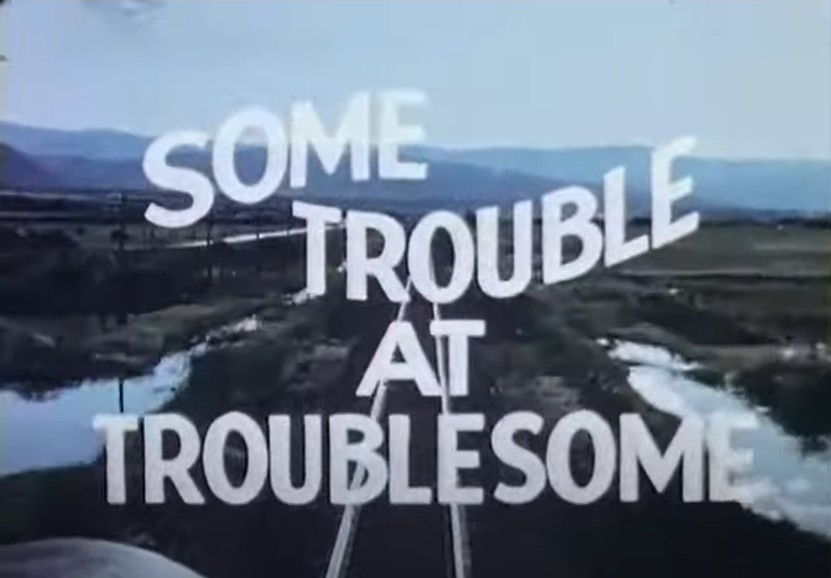
Some Trouble At Troublesome 1956

Denver & Rio Grande Western Railroad

There actually is a location in Colorado called Troublesome (for Troublesome Creek) just a few miles east of Kremmling, where Union Pacific (nee-D&RGW) still has a short siding.

Our feature starts off with a lecture from G.B. Aydelott, President Rio Grande Railroad, scrolling across the screen and continues with the somewhat patronizing tone of the narrator. “This train is worth over a MILLION dollars”, he repeats over and over (implying “which you careless employees turned into splintered wood, contorted steel, and ruined lading”).

Having experienced the wrath of management, our story begins in the remote community of Bond, Colorado. It’s oh-dark 30 in the morning and the 5 man crew (remember those?) is reporting for duty to take the SPD (Southern Pacific – Denver) to Roper Yard in the Mile-High City.

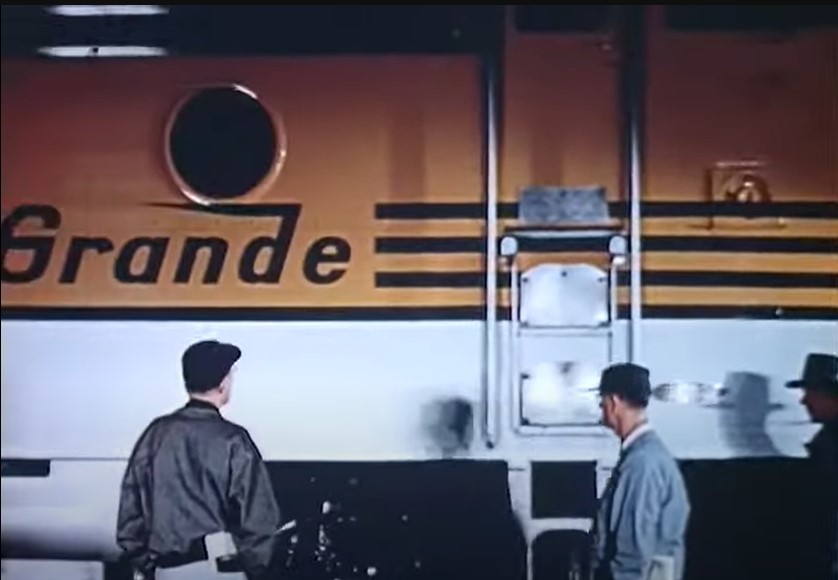
The head end crew, (engineer, fireman, head brakeman) prepares to climb aboard DRGW #5554, an EMD F7A built in February 1949 leading an A-B-B-A set of units. The beautiful “Prospector” scheme in Aspen Gold and silver graces the flanks of these locomotives.

Continue reading
Challenge for Tomorrow 1954

Santa Fe Railway Safety Department

This one was a lot of fun to research and review. An old Santa Fe safety film in glorious Technicolor from the days of yore. Its formal name was the Atchison, Topeka & Santa Fe Railway (ATSF) which stretched from Chicago to Los Angeles, The Bay Area (Richmond, California), and down from Kansas City into Texas.

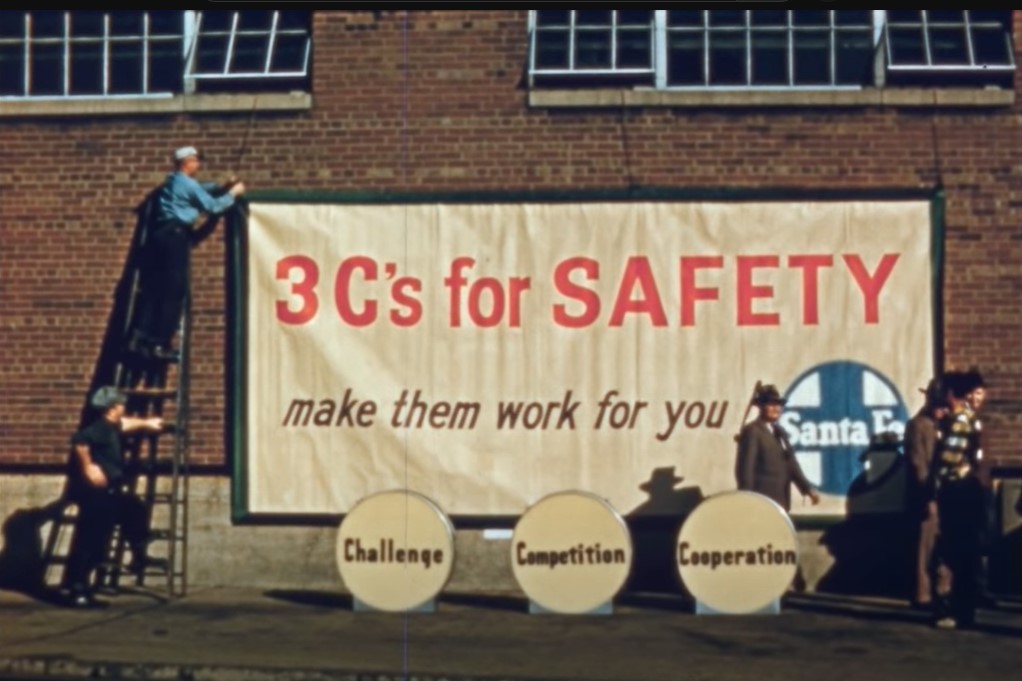
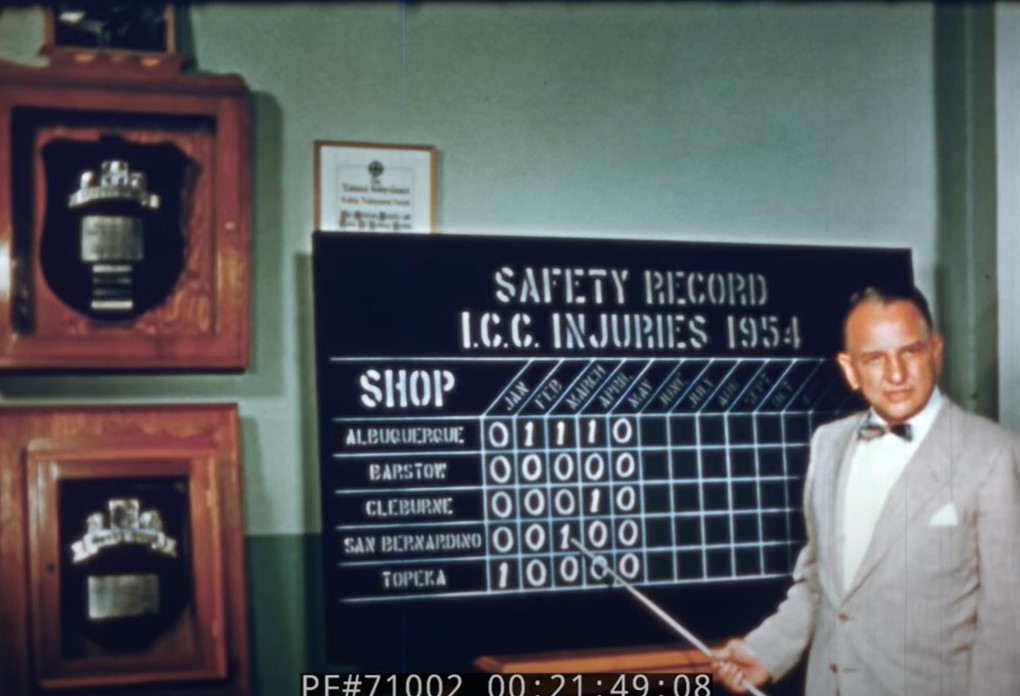
Somehow all the prints I discovered online have the opening credits/title page lopped off. Thus, we’ll use the above safety images instead. The gent in the natty suit and bow tie, (wide lapels must be “IN” this year), has his pointer on San Bernardino’s injury count. He really needs to take a look at Albuquerque.

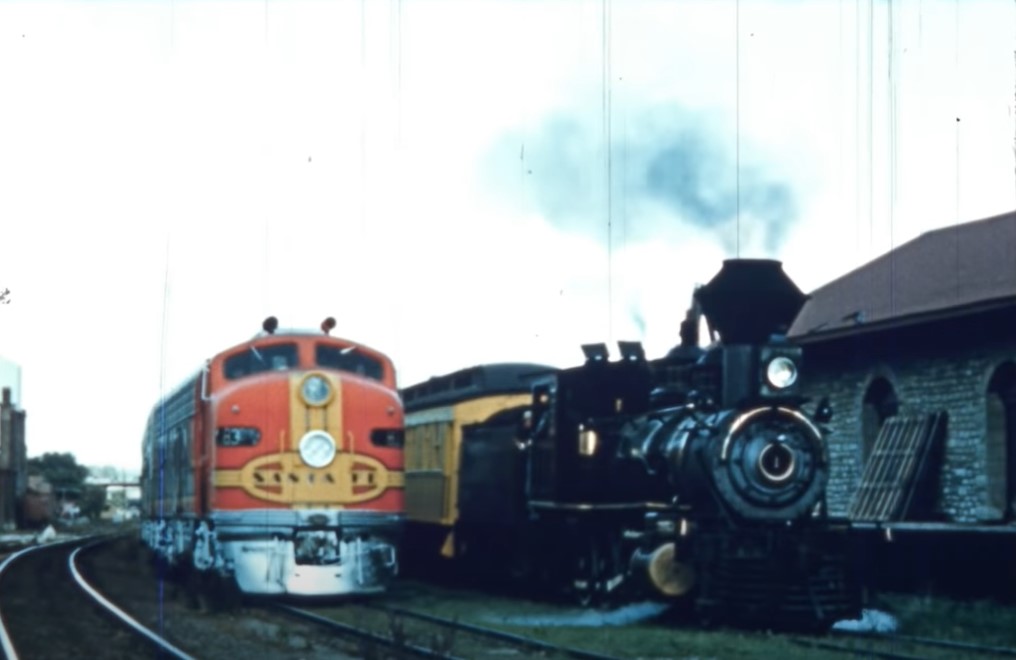
Just a smattering of steam locomotives are shown segueing into Santa Fe’s colorful, first-generation diesel fleet. And there’s no topping that classic red, silver and gold “Warbonnet” scheme on the passenger engines.

Let’s check it out. Santa Fe, All The Waaaaay!!

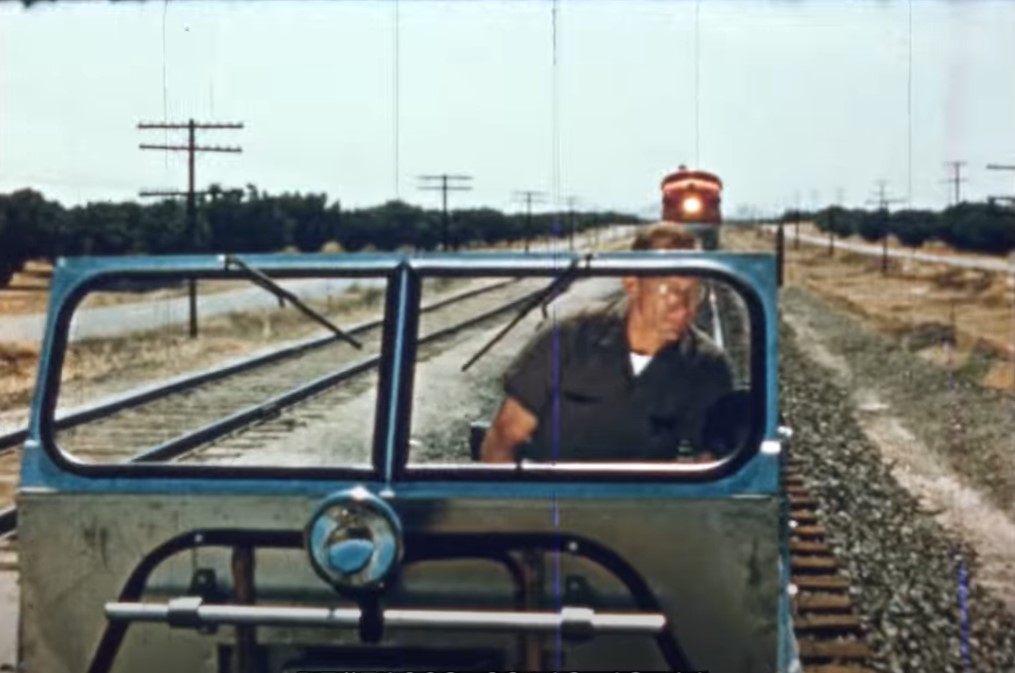
Motorcar operator “Skippy” is trundling down the San Joaquin Valley, blissfully unaware of the approaching San Francisco Chief. Should we warn him? “Look around, Skip, look around!” bellows the narrator. This great bit of melodrama will be fleshed out in the upcoming story. Read on.

Continue reading

Loaded For War 1944

Santa Fe Telefilm Recording

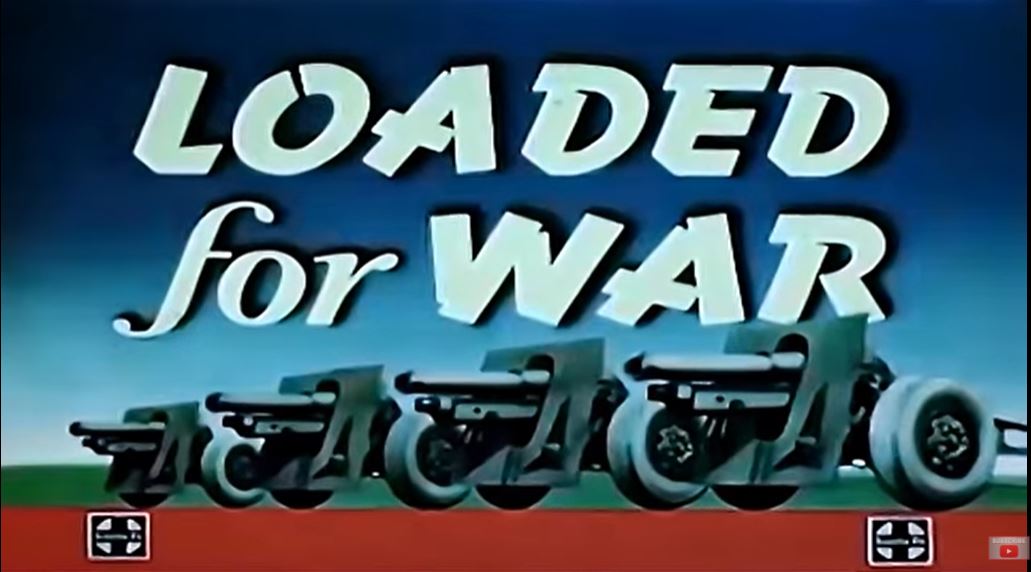
Wow, early first generation diesels star alongside Santa Fe Railway’s magnificent fleet of steam locomotives in this color film showing the AT&SF was doing its bit to help win World War 2.

As a vital link to the Pacific Theater, Santa Fe received the lion’s share of EMD FT diesel locomotives built before and during the war.

Let’s take a look at how one railroad hauled military, freight and passengers along with all the facilities needed to keep the system going. Santa Fe, All the Way!

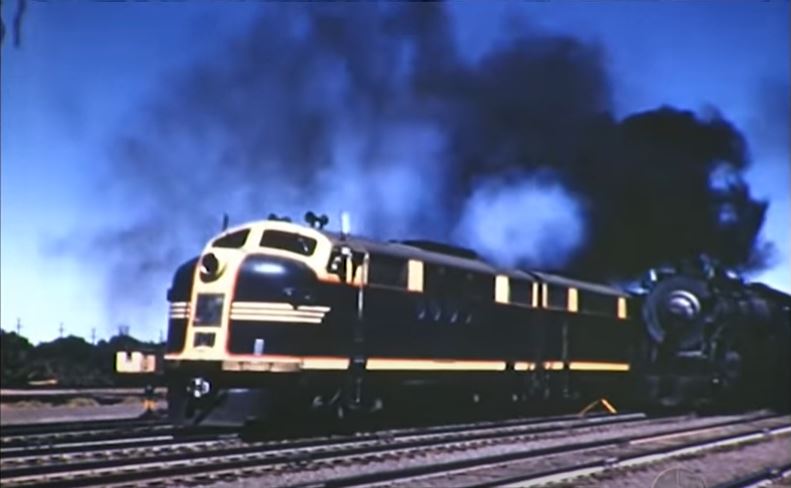
An EMC E6 locomotive gets its slant nose scrubbed down as a Baldwin 4-6-4 backs up alongside; a 4 unit set of EMD FT’s pulls past a very smoky iron horse.

GM’s Electro-Motive Division designed the famous red and silver “Warbonnet” paint scheme as well as the more somber, but still classy blue and yellow for the freight FT’s.

Continue reading

Empire on Parade 1957

Empire Photosound, Inc.

We sing the song of a railroad! Narrator Roger Krupp waxes poetic during this 40 minute film extolling the history and present day operations (circa 1957) of the Great Northern Railway.

Empire on Parade features the westward journey of freight train #401 from Minneapolis to Seattle and the industries and agriculture it serves along the way. We also get many views of the GN’s flagship Empire Builder passenger train.

It’s a festival of first-generation diesel locomotives including representatives from EMD, Alco and Baldwin.  In color.  So let’s take a journey during the hey-day of the post-war Big G.

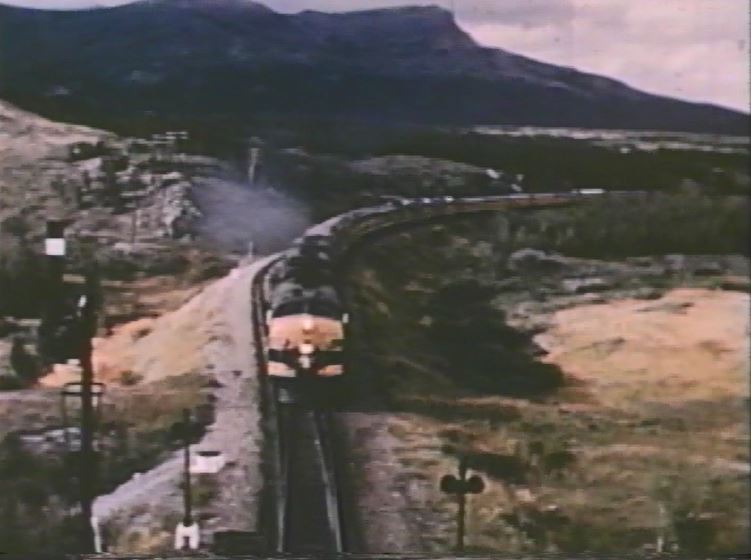
The Empire Builder is about to drop a semaphore signal somewhere in the Montana Rockies. Note the 3 short Great Dome coaches and 1 large Great Dome lounge car which helps date the film after late 1955.

Continue reading